

What Is ROI in Project Management?

How to Calculate the ROI of a Project?
The Advantages of ROI Analysis
Informed Decision Making:
- Project Prioritization: Helps identify and prioritize projects that offer the highest returns, ensuring that investments are made in the most profitable areas.
- Risk Assessment: Assists in evaluating the potential risks versus rewards, aiding in making more balanced and informed decisions.
Resource Optimization:
- Efficient Allocation: Ensures that resources such as time, money, and manpower are efficiently allocated to projects with the best ROI, maximizing overall productivity and profitability.
- Cost Management: Helps in controlling and managing costs more effectively by identifying areas where expenses can be reduced without compromising project quality.
Performance Measurement:
- Success Tracking: Tracks the success and profitability of projects over time, providing a clear picture of which projects are performing well and which are not.
- Continuous Improvement: Offers insights into performance metrics, enabling continuous improvement and refinement of project strategies and execution.
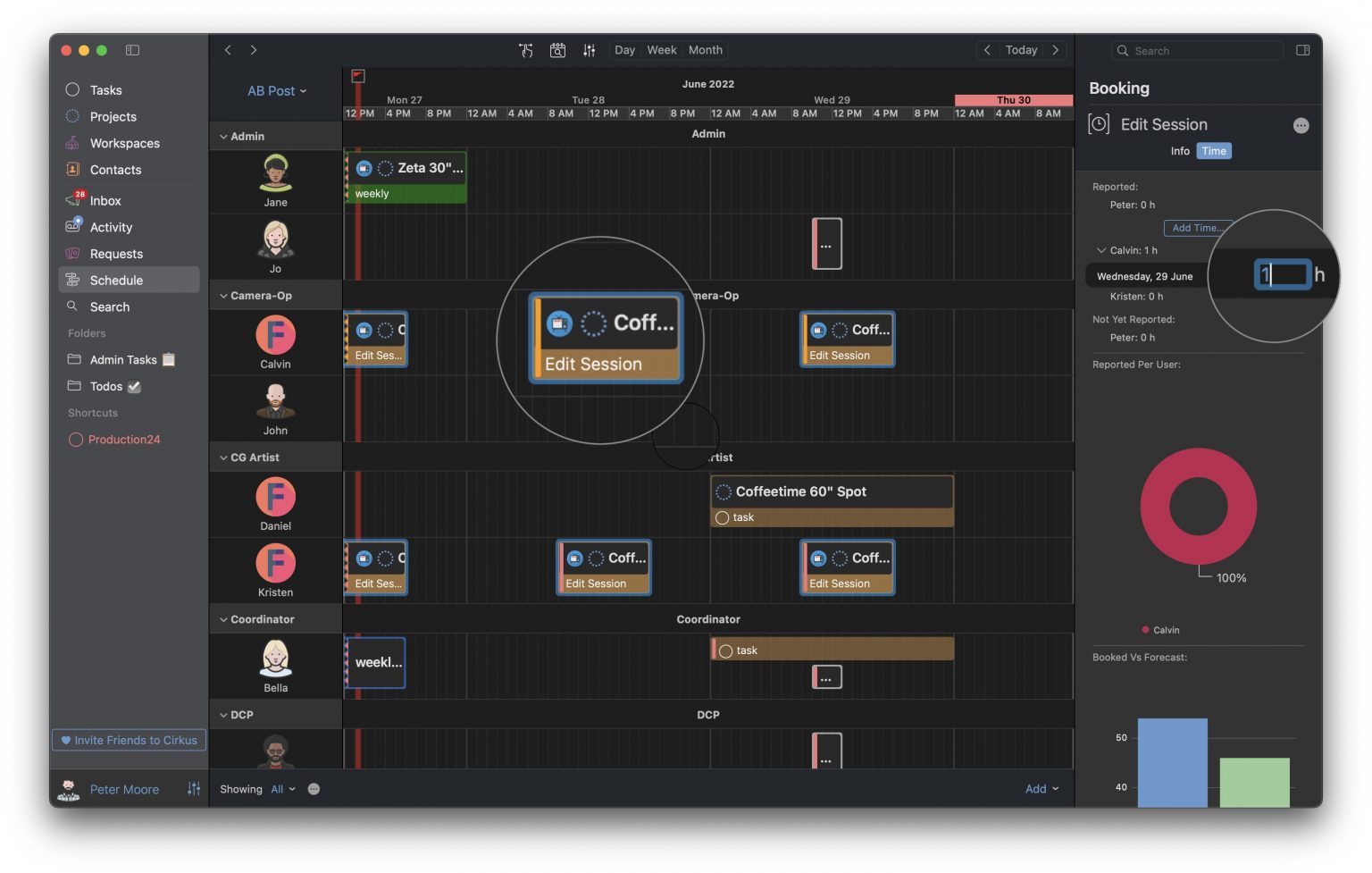
Cirkus enhances these benefits by facilitating seamless communication and collaboration among team members, ensuring everyone is aligned and focused on achieving the project’s ROI goals.
Exploring the Three Types of ROI and Their Implications
1. Financial ROI
Financial ROI focuses on the direct monetary benefits of a project. It evaluates the profitability by comparing the revenue generated to the costs incurred. This type of ROI is essential for assessing the economic value of investments.
- Implications:
- Profitability Analysis: Helps in understanding the direct financial benefits of a project, ensuring that the investments are economically viable.
- Investment Decisions: Guides investors and stakeholders in making informed decisions about funding and resource allocation.
- Performance Benchmarking: Allows comparison of different projects or investments to determine which ones yield higher financial returns.
2. Social ROI (SROI)
Social ROI measures the social impact of a project. It considers the positive changes a project brings to society, such as improved quality of life, community development, and social welfare. SROI is particularly relevant for projects undertaken by non-profits and social enterprises.
- Implications:
- Impact Assessment: Provides a framework for measuring the broader societal impact, ensuring that projects contribute positively to the community.
- Funding Justification: Helps non-profits and social enterprises demonstrate the value of their projects to donors and funding bodies.
- Strategic Planning: Aids in designing projects that maximize social benefits, aligning with organizational missions and societal goals.
3. Environmental ROI (EROI)
Environmental ROI evaluates the environmental benefits of a project. It considers factors such as reduced carbon emissions, improved sustainability, and conservation of natural resources. EROI is crucial for projects with environmental objectives, such as green energy initiatives and conservation efforts.
- Implications:
- Sustainability Metrics: Helps organizations measure the environmental impact, promoting eco-friendly practices and sustainability.
- Regulatory Compliance: Ensures that projects meet environmental regulations and standards, reducing the risk of legal issues and fines.
- Corporate Responsibility: Enhances the organization’s reputation by demonstrating a commitment to environmental stewardship, which can attract eco-conscious customers and investors
Strategically Prioritizing Projects Based on ROI
Conclusion