

As post-production teams grow, managing work becomes more complex. More projects, more stakeholders, tighter deadlines, and larger volumes of content all increase the pressure on operations. Successful growth requires connected workflow systems that support effective media workflow management and help teams coordinate tasks, schedules, approvals, collaboration, and operational visibility from one place.
The best solutions for scalable post-production workflows are tools that improve task coordination, scheduling, feedback, approvals, remote collaboration, requests, templates, time reporting, and operational visibility. Whether you manage a small editing team or a large multi-project operation, scalable workflow solutions help ensure work moves efficiently from intake to final delivery.
Why scalable post-production workflows matter
As projects become larger and teams become more distributed, post-production workflows can quickly become difficult to manage.
Editors, producers, clients, reviewers, and stakeholders all contribute to the process. Without clear systems, communication gaps emerge, deadlines slip, and teams lose visibility into project status. Scalable workflows provide structure. They help teams manage increasing workloads while maintaining quality, consistency, and delivery speed.

- Collaborate from every device
- Automate tasks and workflows
- See all projects at a glance
- Make quotes in minutes
Common bottlenecks in post-production
Many post-production teams face similar challenges as operations grow.
| Bottleneck | What causes it | How workflow software helps |
| Missed deadlines | Unclear schedules and priorities | Centralized planning and deadline tracking |
| Unclear ownership | Tasks assigned informally | Defined responsibilities and accountability |
| Approval delays | Stakeholders responding late | Structured approval workflows |
| Scattered feedback | Comments spread across email and chat | Centralized feedback management |
| Scheduling conflicts | Shared resources and overlapping workloads | Resource planning and scheduling visibility |
| Lack of visibility | Information stored in multiple systems | Unified project and workflow tracking |
Why generic project management tools create friction
Generic project management platforms can work well for basic task tracking. However, post-production teams typically require more specialized workflow visibility. Projects move through multiple stages, involve recurring review cycles, and depend on coordination between creative and operational teams.
Standard task management tools often struggle to support:
- Complex review and approval processes
- Media production timelines
- Cross-project scheduling
- Repeatable production workflows
- Visibility across production stages
As a result, teams often supplement generic systems with spreadsheets, emails, messaging apps, and manual tracking processes. For teams looking to improve their overall post-production workflow, dedicated workflow solutions typically provide stronger operational control.
Best workflow solutions for scalable post-production teams
Scalable post-production workflows are built around several key operational capabilities. Rather than focusing on individual tools, teams should evaluate how effectively a workflow solution supports the entire production lifecycle.
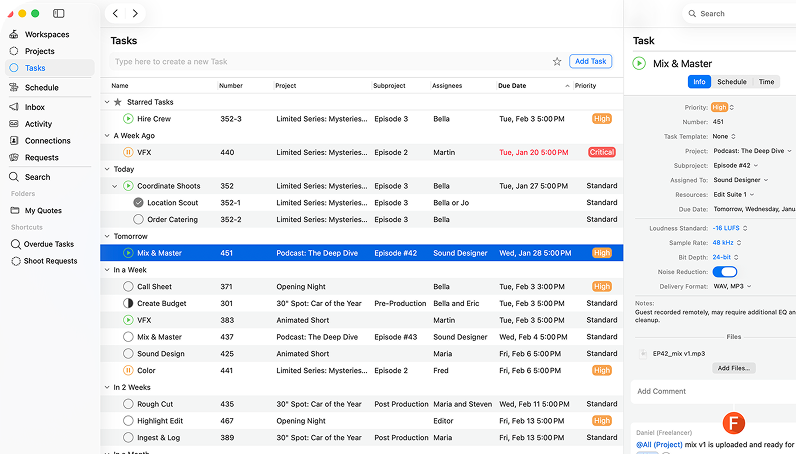
Workflow coordination and task management
At the foundation of every scalable workflow is clear task coordination. Teams need visibility into:
- Who owns each task
- Project priorities
- Dependencies between activities
- Due dates and milestones
- Workflow stages
Strong task management reduces confusion and helps work move consistently through production pipelines. The best workflow platforms allow teams to track progress across projects while maintaining accountability at every stage. Organizations seeking dedicated post-production workflow software often prioritize these capabilities first because they affect nearly every aspect of delivery.
Scheduling and production planning
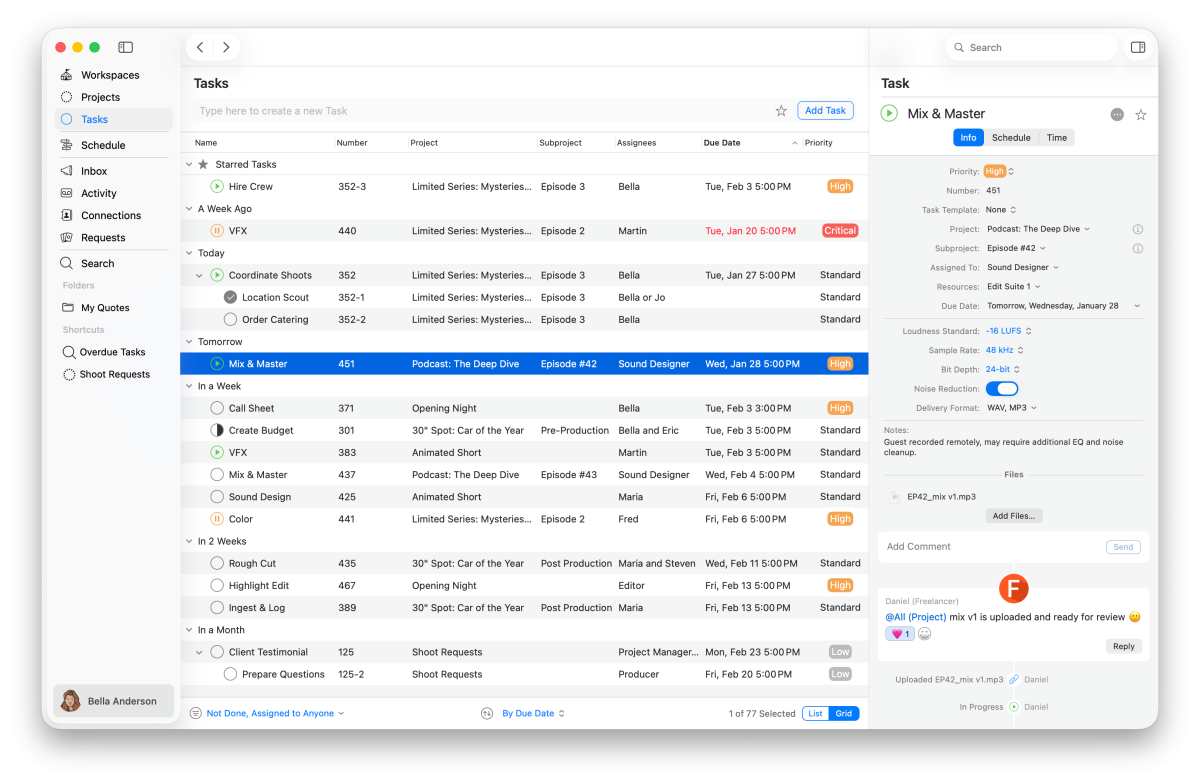
Scheduling becomes increasingly important as teams grow. Editors, producers, reviewers, freelancers, and stakeholders all operate on different timelines. Shared resources must also be coordinated effectively. Modern production workflow software helps teams:
- Manage deadlines
- Allocate resources
- Balance workloads
- Forecast capacity
- Coordinate review schedules
Without scheduling visibility, bottlenecks often appear unexpectedly. Effective planning creates predictability and helps teams deliver projects on time.
Feedback and approval workflows
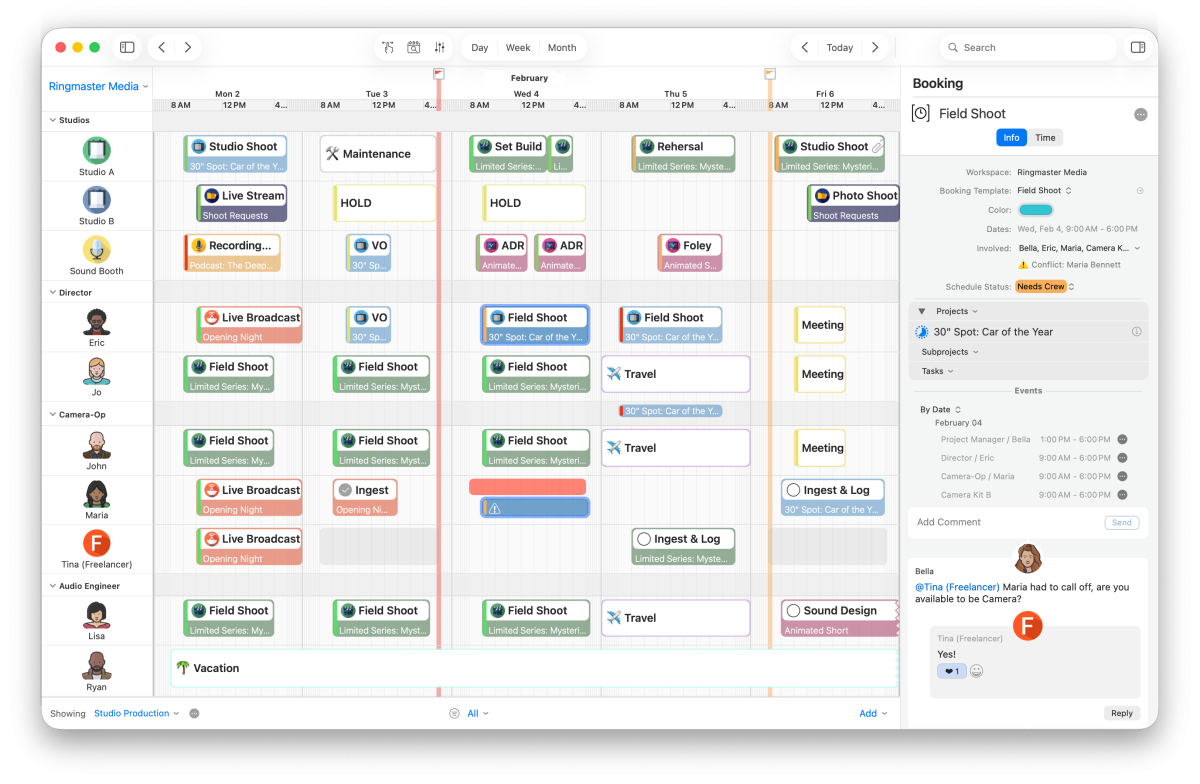
Review cycles are often one of the biggest sources of delay in post-production. Feedback may arrive through email, chat platforms, spreadsheets, or meetings. Multiple versions can create confusion and slow decision-making, particularly when teams are managing complex video production workflows. Structured feedback and approval workflows help teams:
- Centralize comments
- Track stakeholder decisions
- Reduce approval delays
- Improve accountability
A clear approval process ensures projects continue moving forward without unnecessary back-and-forth.
Remote collaboration and workflow visibility
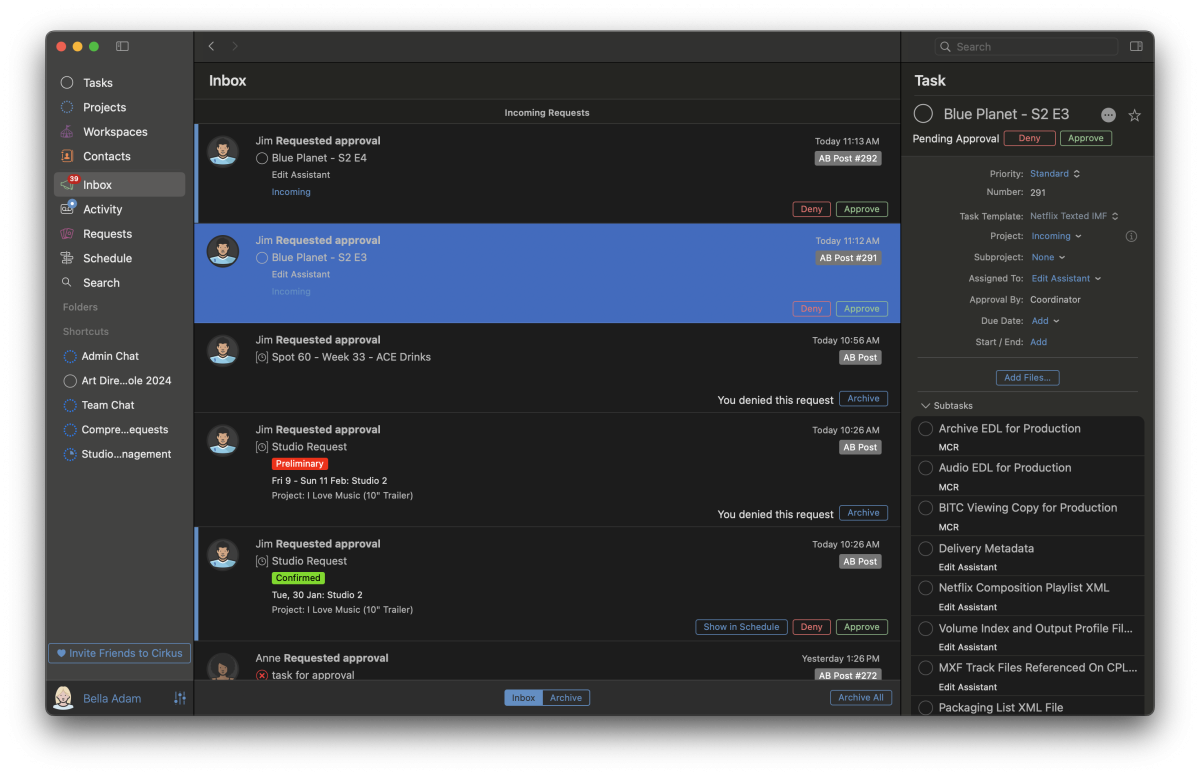
Remote and hybrid work models have become standard across many creative organizations. Distributed teams need a shared environment where everyone can access project information, track progress, and collaborate effectively. Workflow visibility helps teams:
- Monitor project status
- Track updates in real time
- View responsibilities
- Share feedback
- Maintain alignment across locations
A strong remote post-production workflow reduces communication gaps and ensures teams stay connected regardless of location.
Requests, templates, and repeatable workflows
As project volume increases, teams benefit from standardization. Request forms help ensure work enters the system consistently. Templates allow teams to reuse proven workflows instead of rebuilding processes from scratch.
Benefits include:
- Faster project setup
- Consistent delivery standards
- Reduced administrative effort
- Better process scalability
Repeatable workflows help teams manage larger workloads without increasing operational complexity.
Time reporting, quotes, and operational control
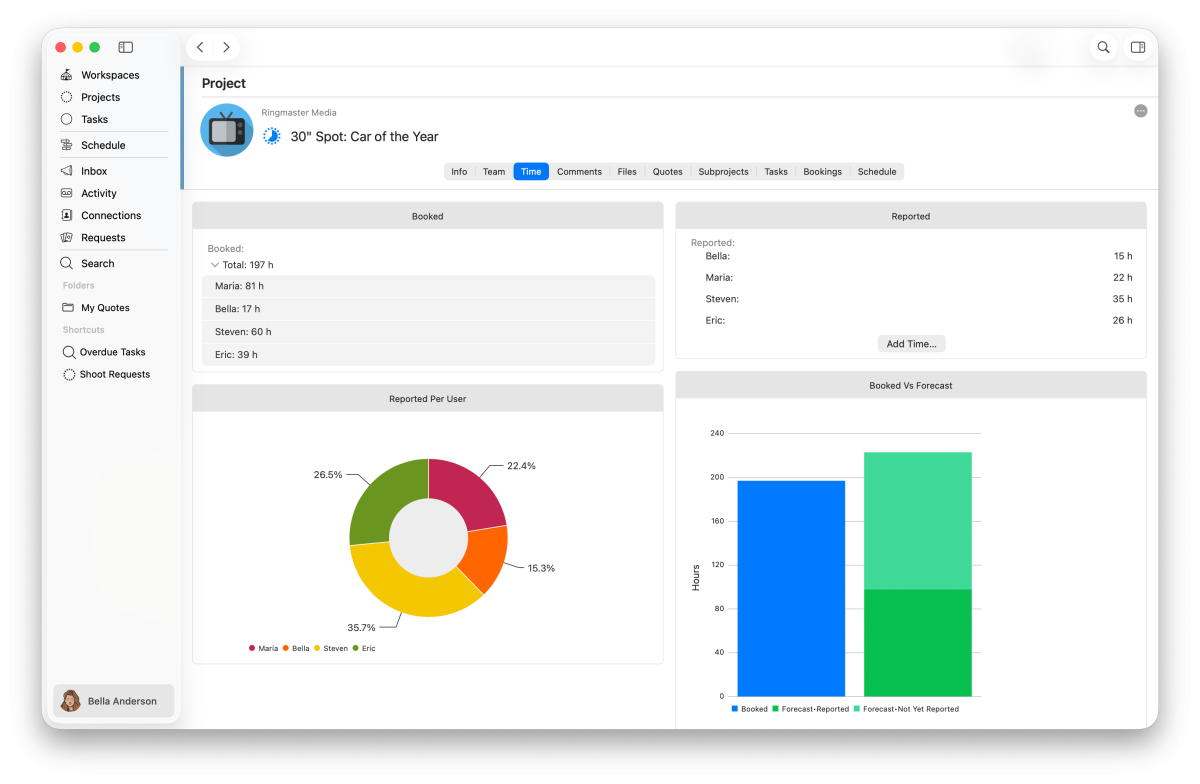
Scalability is not only about project delivery. Teams also need visibility into operational performance. Time reporting and business management capabilities help organizations understand:
- Time spent on projects
- Team utilization
- Workload distribution
- Project profitability
- Resource requirements
- Client quotes
These insights support better decision-making and help leaders manage growth effectively. Many organizations evaluating project management software for post-production increasingly prioritize operational reporting alongside workflow management.
What scalable post-production systems have in common
While workflow platforms differ in their approach and functionality, the most effective systems share several core characteristics. They provide centralized visibility, repeatable processes, clear ownership, scheduling and deadline management, structured collaboration and approvals, and reporting that delivers operational insight.
Most importantly, these capabilities are connected within a single workflow environment, eliminating the need for teams to switch between disconnected tools. For video post-production teams, this level of integration is especially valuable, enabling creative work, reviews, approvals, scheduling, and operational oversight to be coordinated seamlessly across multiple projects.
How Cirkus supports scalable post-production operations
Cirkus provides post-production workflow software that helps media teams manage projects from planning through delivery without relying on disconnected systems. Teams can manage:
- Project planning
- Task coordination
- Resource Scheduling
- Request intake
- Workflow templates
- Collaboration
- Feedback and approvals
- Time reporting
- Quotes
- Operational visibility
For example, teams can assign editing tasks to the right people, track approvals across a campaign, create reusable templates for recurring projects, maintain visibility across remote teams, and monitor operational performance from a single platform. This connected approach helps teams reduce complexity while supporting growth. Creative organizations looking for a dedicated creative agency project management tool often use Cirkus to connect operational planning with day-to-day production execution.
Conclusion
Successfully scaling up a post-production operation is never as simple as just adding more people to your payroll or buying more individual software licenses. As your incoming project volumes rise, your business requires a highly structured, media-centric solution that keeps your tasks, resource calendars, feedback loops, client approvals, and business data completely unified.
If you are ready to eliminate operational blind spots and bring absolute clarity to your creative pipeline, find out how Cirkus can transform your studio.