

Modern post-production is more complex than ever. A single project can involve multiple edits, remote collaborators across time zones, tight delivery schedules, and a patchwork of tools for tasks, files, feedback, and approvals. Editors, producers, VFX artists, sound designers, and clients all need to stay aligned, often under intense pressure.
When post-production projects go wrong, it’s rarely due to a lack of creative talent. More often, it’s poor coordination, unclear responsibilities, version confusion, or the absence of a clear overview. That’s where post-production project management makes the difference.
With the right post-production project management solution, teams can deliver faster, reduce costly mistakes, and lower stress levels, while maintaining creative focus. Effective project management turns post-production from a reactive scramble into a controlled, predictable workflow.

- Collaborate from every device
- Automate tasks and workflows
- See all projects at a glance
- Make quotes in minutes
Why Project Management Is Critical in Post-Production
Post-production has evolved rapidly, and traditional ways of managing work no longer scale. Some of the biggest reasons project management is now critical include:
- Remote and Hybrid Teams
Editors, producers, and creatives often work from different locations. Without a centralized system, communication quickly fragments across emails, chats, and calls. - More Deliverables
A single project may require multiple cuts, formats, languages, and platform-specific versions. Each deliverable adds complexity that must be tracked precisely. - More Platforms
Content is no longer made for just one screen. Social media, streaming platforms, broadcast, and internal channels all demand different outputs and timelines. - Less Time
Deadlines are tighter, and turnaround times are shorter. There is little margin for miscommunication or delays caused by poor planning. - Version Chaos and Miscommunication
Multiple file versions, unclear feedback, and lost approvals can derail schedules and frustrate teams and clients alike.
Strong project management brings order to this complexity, ensuring everyone knows what to do, when to do it, and with which assets.
The Core Pillars of Effective Post-Production Project Management
Successful post-production project management is built on a few core pillars that work together to create clarity and control across the entire workflow.
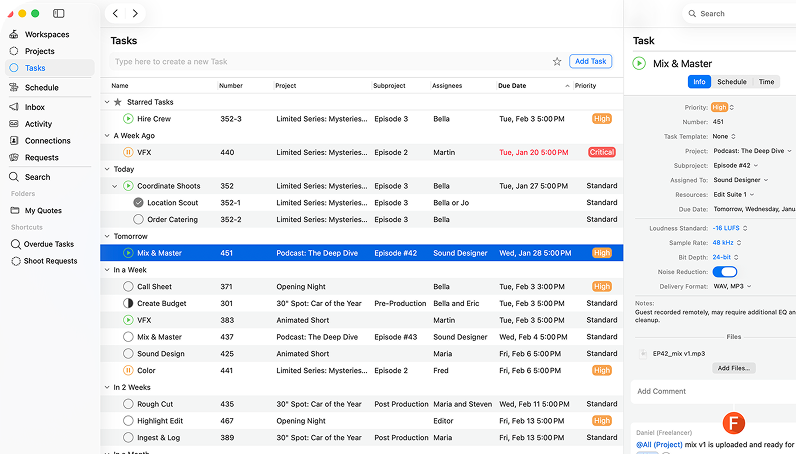
Centralized Task and Schedule Management
At its core, post-production is a sequence of phases: ingest, editing, sound, color, VFX, reviews, and delivery. Each phase should have a clear owner and defined responsibilities.
Breaking the project into structured tasks or cards allows teams to assign work to specific people with clear deadlines. Producers and supervisors gain instant visibility into what’s on track, what’s delayed, and where risks are emerging. A centralized schedule replaces guesswork with transparency.

Asset and Version Management
Tasks in post-production are always tied to media assets as part of the project management life cycle. Footage, timelines, audio files, graphics, and final exports must all be managed alongside the work itself.
Good project management connects tasks with assets throughout the project management life cycle, using tagging, metadata, and consistent naming conventions to reduce confusion. This ensures teams always know which version is current, which files are approved, and which still require work.
Collaboration and Feedback Loops
Post-production workflows depend heavily on reviews and approvals, making collaboration tools for teams essential. Typically, feedback flows from clients to producers, then to editors and specialists, often looping multiple times.
Centralizing feedback directly next to the relevant task or asset using collaboration tools for teams keeps everyone aligned. All comments, decisions, and approvals are visible in one place, reducing misunderstandings, speeding up approvals, and eliminating the need to search through emails or chat threads.
Resource and Capacity Planning
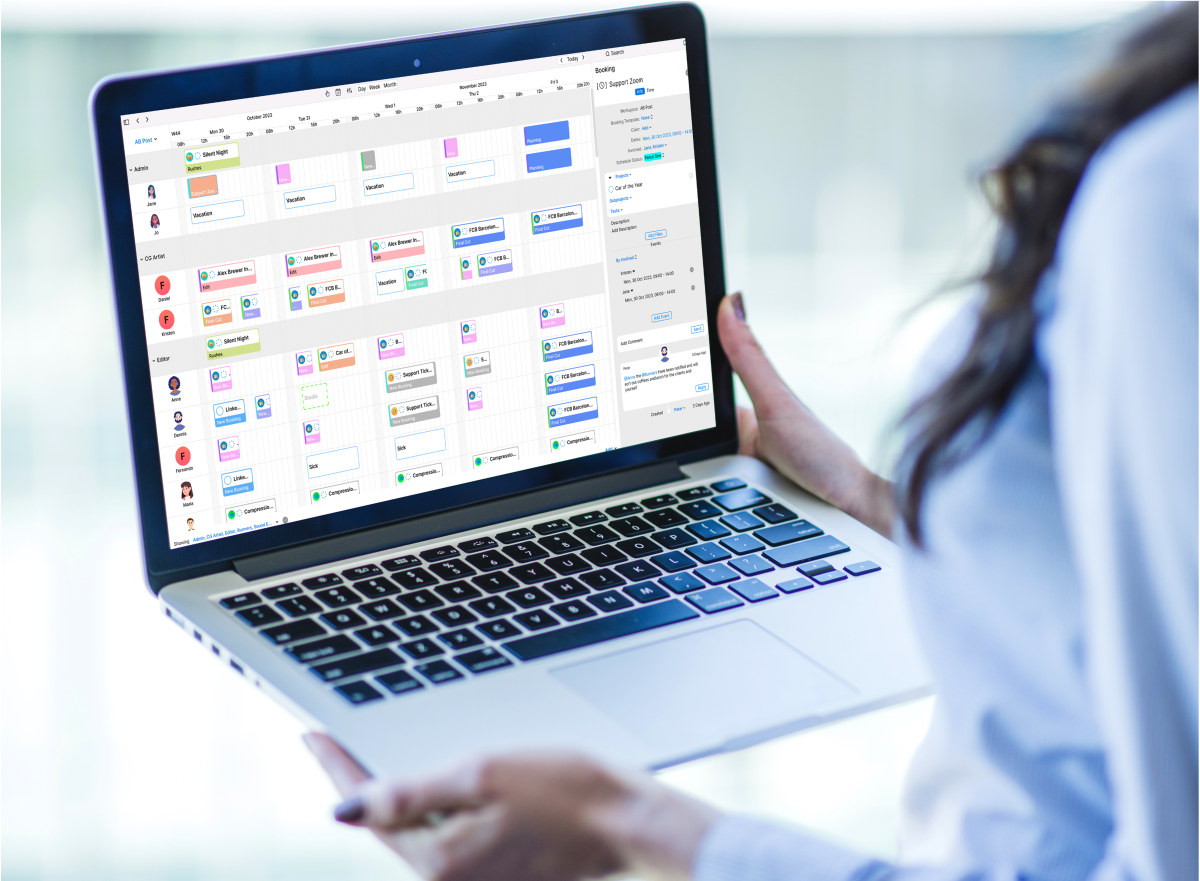
People and rooms are just as important as tasks and files. Editors, colorists, sound studios, and edit suites are finite resources that need careful planning.
Project management for creative teams makes it easy to see who is available, who is overloaded, and where gaps exist. This helps avoid double-booking edit suites, anticipate when freelancers are needed, and decide confidently whether the team can take on new projects.
How to Evaluate Post-Production Project Management Software
Choosing the right project management software for post production can make a significant difference. When evaluating tools, look for features that support the realities of post workflows rather than generic project tracking.
Key must-have features include:
- Centralized task and schedule management tailored to post-production phases
- Clear visibility into project status, deadlines, and dependencies
- Asset and version tracking connected to tasks
- Integrated collaboration and feedback tools
- Resource and capacity planning for people and facilities
- Scalability for complex, multi-project environments
- Industry-specific design, not just general-purpose task lists
Some teams combine multiple tools to cover these needs, while others look for an all-in-one solution as part of their enterprise project management strategy. Platforms like Cirkus are designed specifically with media and post-production workflows in mind, offering more depth than generic tools.
Cirkus: The Best Post-Production Project Management Tool for Seamless Workflow
Cirkus is built specifically for modern post-production teams that need clarity, speed, and flexibility from the first edit through final delivery.
As a post production project management software, Cirkus reduces chaos, streamlines communication, and gives producers and creatives a shared source of truth. For teams looking for the best post production project management tool, Cirkus offers a seamless way to manage complex workflows with confidence, so you can focus less on coordination and more on creativity.