

Enterprise project management (EPM) helps organizations manage multiple projects in a coordinated, strategic way. Instead of treating work as isolated initiatives, EPM aligns projects with company-wide goals so teams can deliver measurable business outcomes.
Yet many enterprises still struggle with siloed communication, inconsistent processes, unclear priorities, and resource constraints. Remote and hybrid work add layers of complexity, issues that even the best enterprise project management software aims to solve.
This article explores smart, practical ways to improve enterprise project management today, using modern tools, stronger governance, and simple habits that make cross-team work easier, especially with a unified solution like Cirkus.
What is enterprise project management (EPM)?
What is enterprise project management? Enterprise project management is the practice of managing projects across the entire organization, ensuring they directly support strategic objectives. While traditional project management focuses on completing a single project successfully, EPM looks at the full portfolio; how projects interact, how resources are shared, and how work contributes to business goals.
Many companies adopt an enterprise project management office (EPMO) to standardize methods, ensure consistent reporting, and drive governance. The goal is to remove friction, reduce duplicated effort, and give leaders a single view of all enterprise projects, supported by robust enterprise project management tools.
Common challenges in enterprise project management
Even experienced organizations face predictable challenges when scaling their project delivery processes.
Communication gaps
In large enterprises, information often lives inside personal inboxes, direct messages, or private chats. Without shared communication and scheduling tools, updates aren’t shared transparently, handoffs get delayed, and decisions move slowly. This is one of the biggest issues solved by the best enterprise project management software 2025.
Distributed teams and time-zone differences make this worse. Without shared visibility, even simple tasks turn into blockers. Tone and context are easily misinterpreted, leading to misalignment and rework.
Misalignment with business strategy
A major challenge in EPM is the tendency to launch projects without clearly linking them to company goals. When this happens:
- teams duplicate work
- low-value initiatives consume resources
- leaders struggle to measure impact
- budgets spread too thin
Enterprise project management solves this by ensuring every project supports strategic outcomes—not just departmental needs.
Resource constraints and conflicts
Specialists with high-demand skills often get booked across multiple projects. Without proper visibility, this creates bottlenecks and unrealistic workloads. The result? Delays, overtime, and compromised quality.
Modern enterprise project management software helps forecast capacity, track workloads, and distribute resources more sustainably.
Complexity of managing multiple projects
Large organizations rarely run projects independently. Departments share people, tools, timelines, vendors, and budgets. Managing multi-project environments means juggling:
- shared milestones
- conflicting priorities
- dependency chains
- tight cross-functional schedules
This complexity requires integrated systems and stable routines to prevent schedule slips.
7 smart ways for successful enterprise project management
Successful EPM requires a combination of strong governance, transparent communication, and the right project management tools. Here are seven actionable practices to improve project delivery across your organization.
Link all work to strategy with a standing portfolio council
A standing portfolio council ensures that every project directly supports business strategy. It reviews proposals, evaluates priorities, reallocates resources, and monitors progress consistently. The benefits include:
- fewer low-impact projects
- better prioritization
- increased transparency
- stronger organizational alignment
A portfolio council is essential for any enterprise trying to scale project governance effectively.
Conduct performance reviews
Regular performance reviews and post-project assessments allow teams to learn, adapt, and refine their processes. Using enterprise project management tools like Cirkus makes this process easier. With its real-time data on:
- schedules
- task progress
- budgets
- time reports
Leaders can identify patterns, analyze productivity, and improve decision-making. This fosters a continuous improvement mindset across departments.
Manage multi-project complexity with dependency mapping and integrated planning
Cross-team dependencies are often where enterprise projects fail. When one team moves late, everyone downstream is affected. In creative project management, dependency mapping brings transparency to these relationships. Pair this with integrated planning, and teams can:
- see shared milestones
- identify bottlenecks early
- align parallel workstreams
- adjust plans proactively
This ensures stability and predictability across the entire project portfolio.
Use one enterprise platform as the shared system of record
One of the biggest problems in enterprise environments is having scattered tools, different versions of schedules, spreadsheets, and documents. This causes misalignment and slows down decision-making.
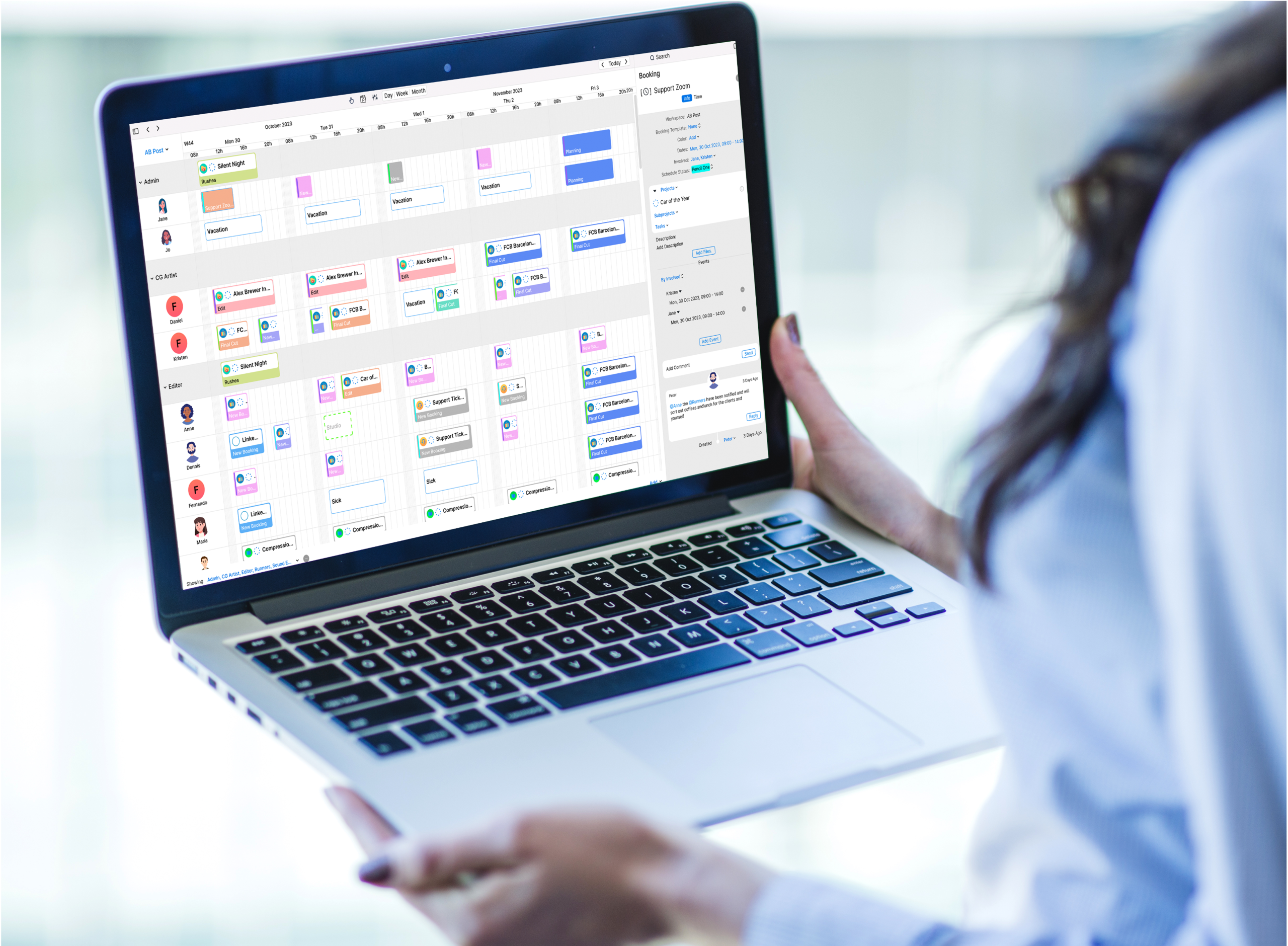
Using a single enterprise project management software solution ensures everyone works from the same real-time data. With Cirkus, enterprises can centralize:
- scheduling
- resource planning
- task management
- time reporting
- quotes
- project communication
This unified workspace reduces confusion, improves accountability, and accelerates decision-making, especially for creative and operations teams.
Set clear communication routines and decision paths
Clear communication is the backbone of enterprise project management. When teams understand how updates flow, who approves changes, and which channels to use within a collaboration tool for enterprise teams, the entire workflow becomes smoother and more efficient.
Effective communication routines include:
- weekly alignment meetings
- defined escalation paths
- transparent decision logs
- shared project channels
- consistent documentation
These routines ensure shared ownership and reduce the risk of missed details, especially in hybrid or remote teams.
Make enterprise project management work with Cirkus
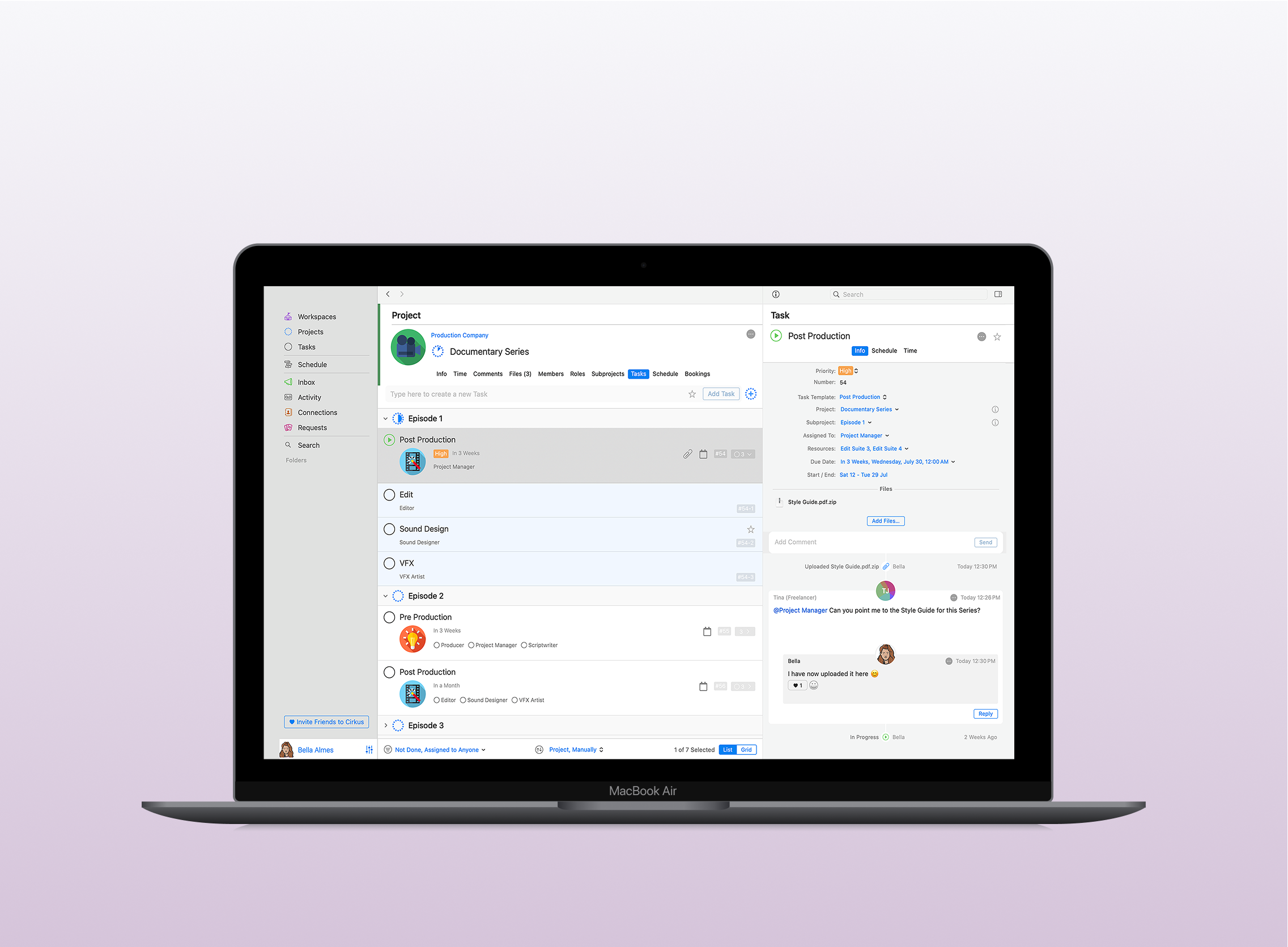
Enterprise project management becomes far easier when strategy, people, and systems align. Cirkus helps organizations achieve exactly that. As an all-in-one enterprise project management platform, Cirkus acts as the organization’s shared system of record, bringing together:
- project schedules
- resource plans
- budgets
- time reports
- task assignments
- team communication
With everything in one place, teams eliminate data silos, standardize processes, and improve collaboration across departments. Cirkus supports both operational and creative teams with workflows designed for enterprise-scale environments.