

What once relied on edit suites, shared servers, and in-person reviews is now fully distributed. Editors, producers, sound designers, and clients collaborate across cities, countries, and time zones. Connected through cloud tools and shared systems rather than physical rooms.
This shift has pushed the industry toward a remote post-production workflow. It’s no longer a stopgap solution; it’s how modern post-production runs. Studios gain access to global talent, reduce infrastructure costs, and stay flexible. At the same time, managing a fully remote post production team introduces new complexity, especially when work spans multiple time zones.
Time zones are often seen as friction. Delayed responses, misaligned schedules, and work that pauses overnight can quickly slow momentum. But when handled intentionally, time zones become an advantage, allowing a post production workflow to keep moving while different parts of the team are offline.
In this article, we’ll explore how post-production workflows evolve in remote environments, the most common challenges distributed teams face, and how to design a remote post production workflow that turns time zones into a strength rather than a liability.
What Is a Remote Post-Production Workflow
A remote post-production workflow replaces physical proximity with shared systems that connect tasks, schedules, reviews, approvals, and handoffs. Media lives in centralized storage, edits move through structured tasks, and reviews and approvals happen digitally rather than in edit suites.
The stages of post-production haven’t changed, but the connections between them have. Conversations that once happened in person now need to be written down. Handoffs replace quick check-ins. Decisions need to be visible to everyone, regardless of location.
When a good workflow and project management tool such as Cirkus is in place, remote workflows can actually be faster. Teams in different time zones hand work off at the end of their day. Editors cut in one region, producers review in another, and revisions are ready by morning.

5 Common Challenges of Remote Post-Production
Most issues that appear in remote post-production aren’t new, they were always there. Going remote simply makes them more visible. What used to be solved by proximity now needs structure. Understanding these challenges is the first step toward building a resilient remote post production workflow, and, ultimately, the best post production workflow for distributed teams.
1. “Where Is That File?” – Media Chaos and Slow Transfers
Media confusion is one of the fastest ways to slow down a post production team. Editors wait on downloads, producers aren’t sure which cut is current, and links from personal drives disappear without warning.
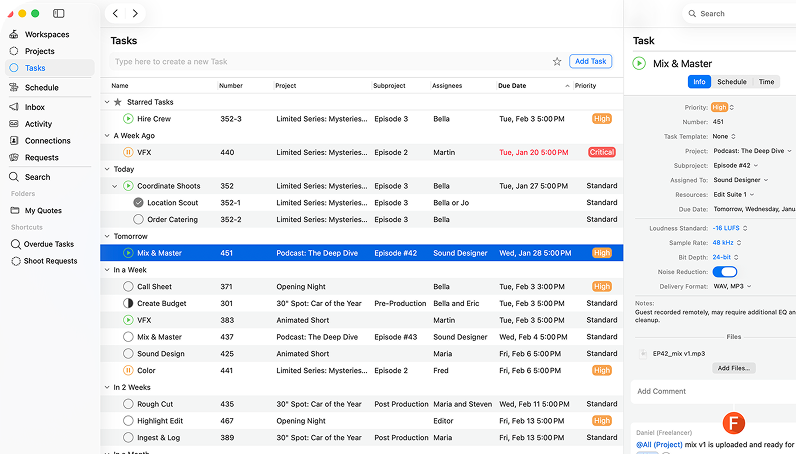
In a remote post production workflow, this lack of clarity quickly compounds. People duplicate work, re-download files “just in case,” and lose trust in the process. The fix isn’t complicated, but it does require discipline and the kind of structure you’d expect from a solid media project management guide: centralized storage, a clear folder structure, proxy workflows that work across regions, and a single source of truth for media. When everyone knows exactly where files live, the entire post production workflow becomes calmer and faster.

- Collaborate from every device
- Automate tasks and workflows
- See all projects at a glance
- Make quotes in minutes
2. Time Zone Misalignment and Endless Delays
Time zones become a problem when workflows are too tightly coupled. A single unanswered question can block progress for half a day. Multiply that across a project, and timelines start to slip.
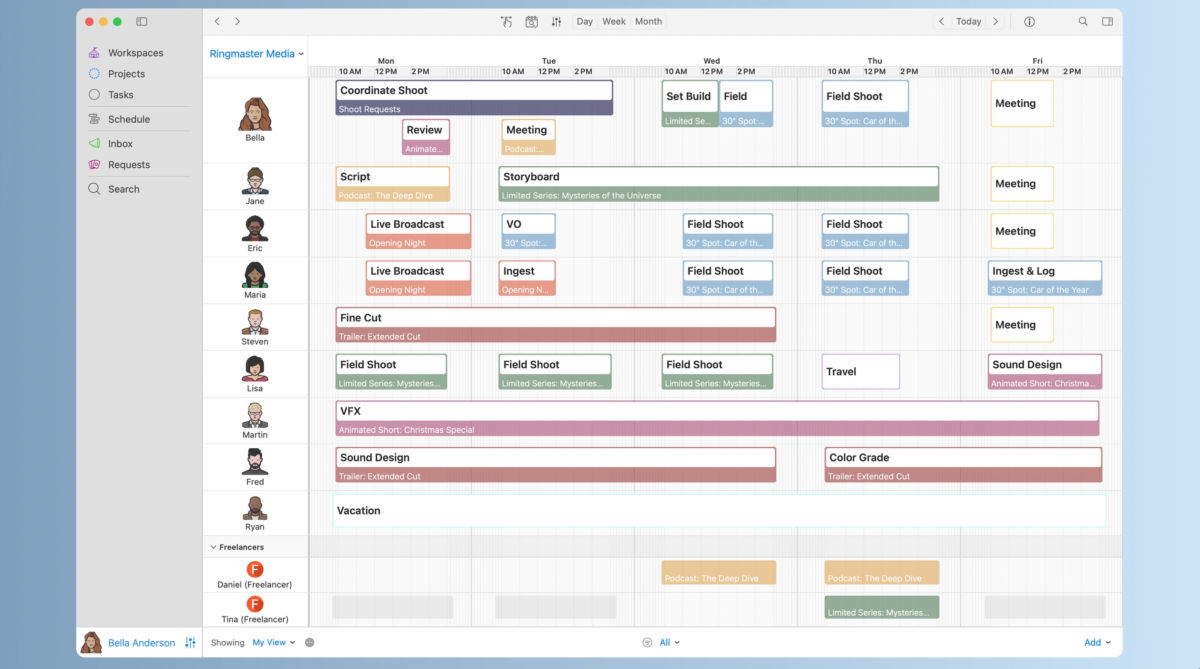
These delays aren’t inevitable. Mapping team locations, defining overlap hours, and documenting handoffs dramatically reduce friction. These are simple but effective team collaboration tips, especially when everyone has a clear view of the project schedule. Even a small overlap window can be enough when expectations are clear. When teams know what’s complete, what needs review, and who owns the next decision, work continues even while others are offline.
3. Feedback Chaos: Too Many Channels, No Clear Decisions
Feedback often breaks down in remote setups. Notes arrive in emails, chats, documents, and voice messages, usually spread across too many tools. Without the right tools for better media team collaboration, editors receive conflicting direction and don’t know which version is approved.
This slows the post production workflow and erodes morale. Reworking edits because feedback wasn’t clear is one of the most common causes of frustration in a remote post production team. Centralizing reviews in one tool, assigning a clear decision owner, and recording approvals directly in the project removes ambiguity and keeps work moving forward with confidence.
4. Communication Gaps and “Invisible” Team Members
Without shared space, communication gaps appear more easily. Priorities become unclear, small misunderstandings linger, and some team members quietly fall out of the loop.
Remote post production workflows succeed when communication is explicit. Short, structured check-ins help align priorities, while written updates create visibility across time zones. Clear task descriptions replace vague requests. This is where strong project management for creative team workflows matter, and where a tool like Cirkus supports it all by giving clear direction on each project, ownership on every task, and shared visibility for the entire post production team.
5. Burnout from Odd Hours and Constant Pings
Working across time zones can slowly push people into unhealthy schedules. Late-night calls, early-morning reviews, and constant notifications make it difficult to disconnect. Without critical path scheduling for complex projects, teams default to urgency instead of clarity, leading over time to fatigue, mistakes, and higher turnover.
A sustainable remote post production workflow protects people’s time as deliberately as it tracks tasks. Setting boundaries around meeting times, rotating inconvenient schedules, and agreeing on response-time expectations allows teams to work globally without burning out.
Building a Future-Proof Remote Post-Production Workflow with Cirkus
Remote post-production doesn’t just need project management, it needs enterprise project management built for media, time zones, and complex workflows. Cirkus acts as a shared control center for modern post production teams. Tasks, schedules, reviews, approvals, and handoffs live in one place, giving everyone visibility regardless of where or when they’re working.
Because Cirkus is designed for post-production workflows, it supports the realities of remote work: structured handoffs across time zones, clear ownership of tasks and decisions, and visibility into what’s happening next. Instead of relying on constant messages or late-night calls, teams can trust the workflow to carry context forward.
A remote post production workflow doesn’t fail because teams are distributed. It fails when tools aren’t built for how post-production actually works. With the right structure, and the right platform, distance becomes an advantage, not a blocker.